By Mira Chen — The collection database in Heartopia is one of the deepest systems in the game, yet it is entirely optional to engage with. Over 300 distinct entries wait to be discovered across fish, insects, birds, recipes, characters, and pets. This guide explains exactly how the museum and collection system works, what each category rewards, and the fastest way to complete every set without wasting a single day. All data is verified from the official Heartopia community wiki (heartopia.app) as of the August 2026 version.
How the Collection System Works
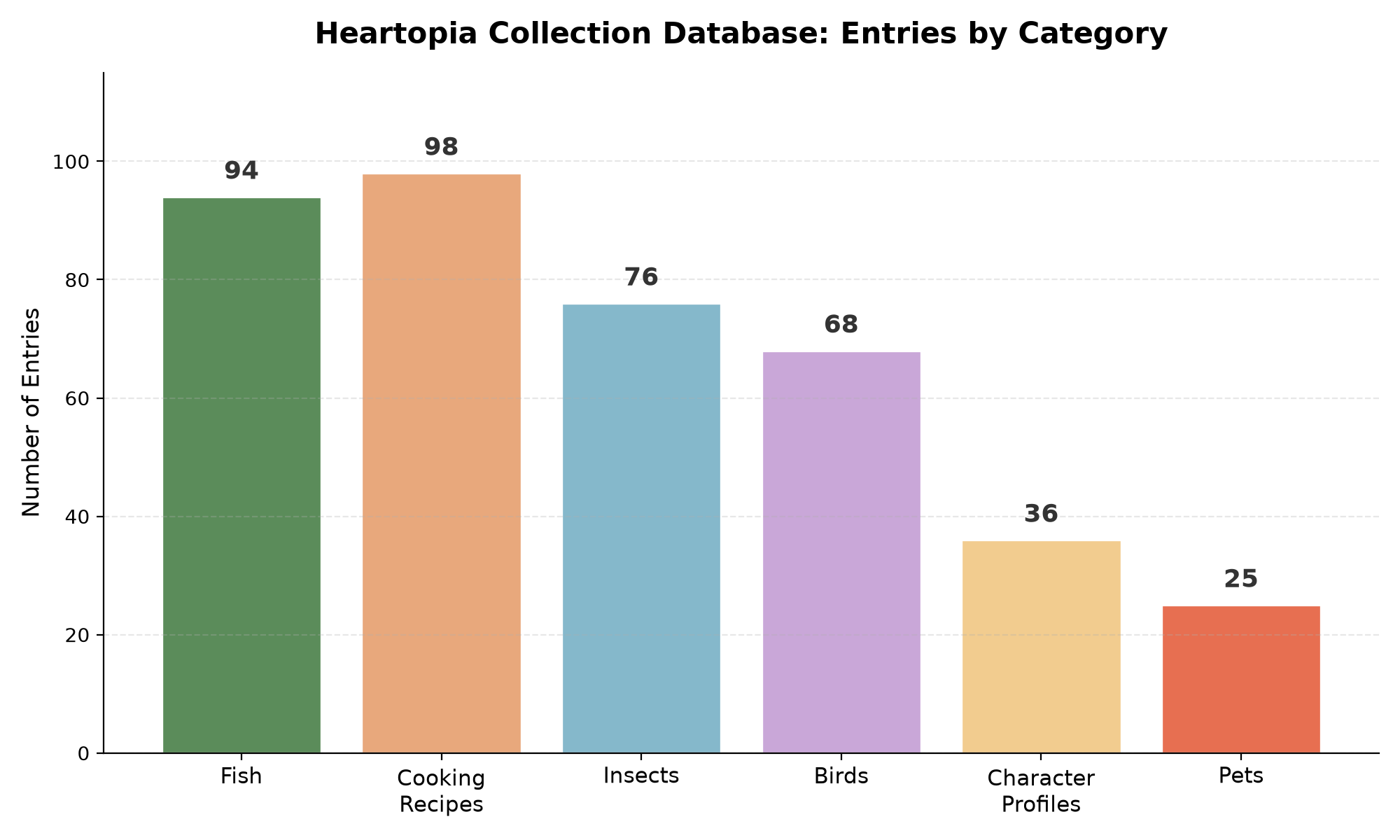
Heartopia tracks nearly everything a player finds in a single Collection menu, opened from the watch. Unlike games that hide a codex behind a shop or menu, the Collection database is always accessible and updates the moment a new species is observed or caught. The database is organized into six main categories, and each category tracks a completion percentage so players always know exactly what remains to be found.
- Fishing: 94 unique fish species caught across lakes, rivers, ponds, and oceans.
- Cooking: 98 cooking recipes that unlock as ingredients and kitchen tools are obtained.
- Bug Catching: 76 insect species found by region, season, and time of day.
- Bird Watching: 68 bird species that migrate and appear on rotating schedules.
- Character Profiles: dozens of NPC profiles that fill in as relationships deepen.
- Pets: 25 adoptable pets across both cat and dog lineages.
The fundamental rule of the Collection system is that spawns depend on context. Fish change by location and weather, insects by season and hour, and birds by migration cycle. A player who checks the same pond at the same time every day will never complete the fishing set — the game rewards visiting different areas under different conditions. This is where the hidden features in Heartopia become valuable, since several weather-driven spawns are never explained in the tutorial.
Because the Collection menu updates retroactively, there is no downside to logging items early. A fish caught on day two still counts toward the set even if the player does not open the Collection menu until week three. The practical takeaway is simple: treat collection progress as an automatic background tracker and focus deliberate effort only on the categories a player actively wants to complete first.
The Museum: Donating for Rewards
The town museum accepts donations of fish, insects, and birds to fill its display cases. Donating is distinct from simply catching — a catch fills the Collection entry, but donating an item to the museum is what unlocks the museum’s exclusive rewards. The museum is organized by category, and each category has its own completion milestone.
The most important reward structure is the completion bonus. Completing a full set in a given museum category grants a permanent gameplay perk that applies for the entire playthrough. These perks are the real reason to bother with the museum, and they are significant enough to reshape a player’s daily routine.
- Artifacts category: Completing the set grants +15% digging speed permanently.
- Weapons category: Completion unlocks a display case decoration and +5 max HP.
- Minerals category: Completion grants +10% mining yield permanently.
- Household category: Completion unlocks a rare recipe scroll and +10% NPC friendship gain.
Beyond the completion bonuses, donating also yields Museum Stars, a currency used for exclusive purchases. Players who complete the insect donation set unlock the Entomologist title and a Bug Display Case furniture piece. The home building guide explains how display furniture like the Bug Display Case boosts the weekly Home Assessment score.
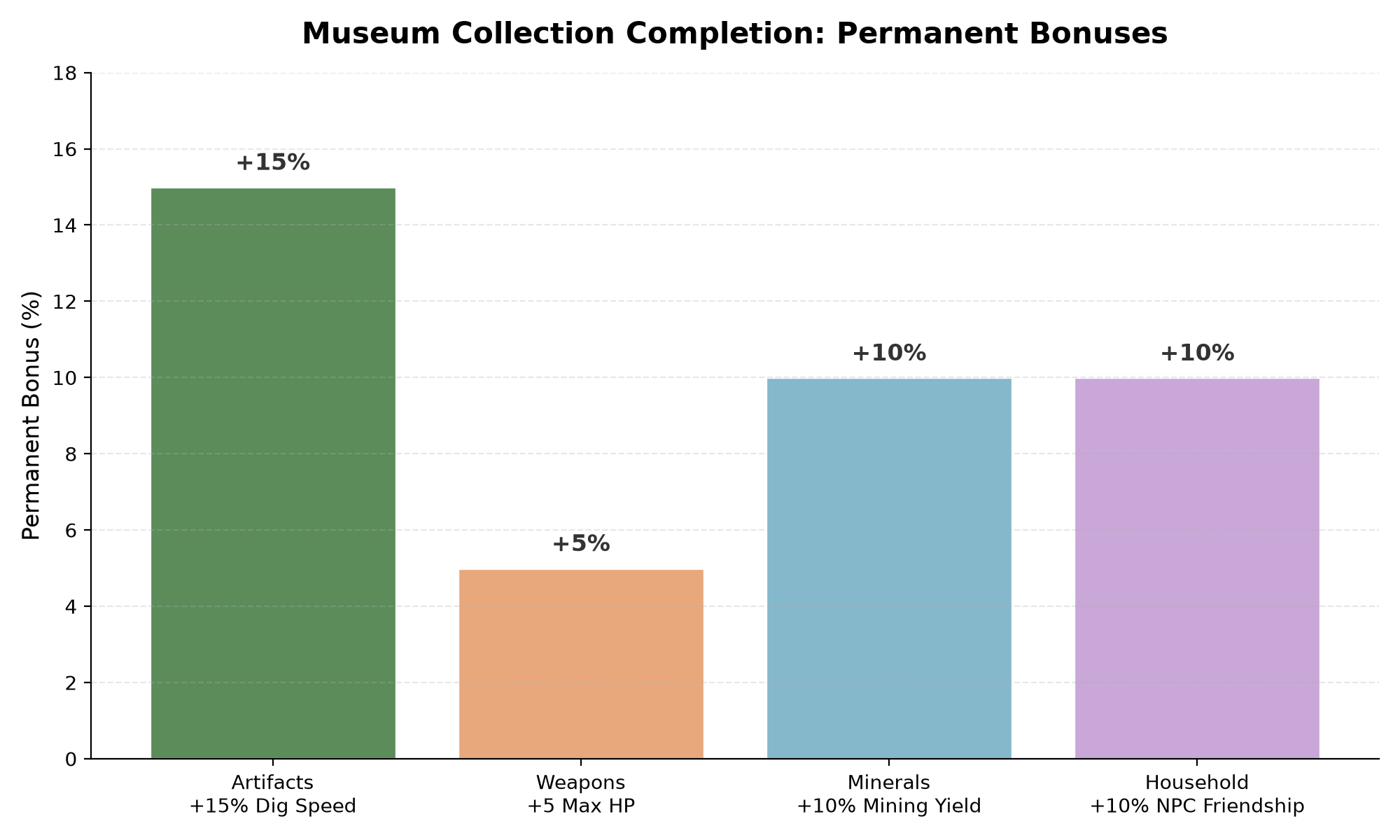
The completion bonuses are not all equal in value, and players should prioritize accordingly. The +15% digging speed and +10% mining yield bonuses directly accelerate two of the most grindy activities in the game, so they are usually worth finishing first. The +10% NPC friendship gain is a strong long-term investment for players who plan to complete their character relationships. Because these perks are permanent and stack with other bonuses, completing a museum category is effectively a permanent upgrade to that part of the daily routine.
Rarity Tiers and Sell Values
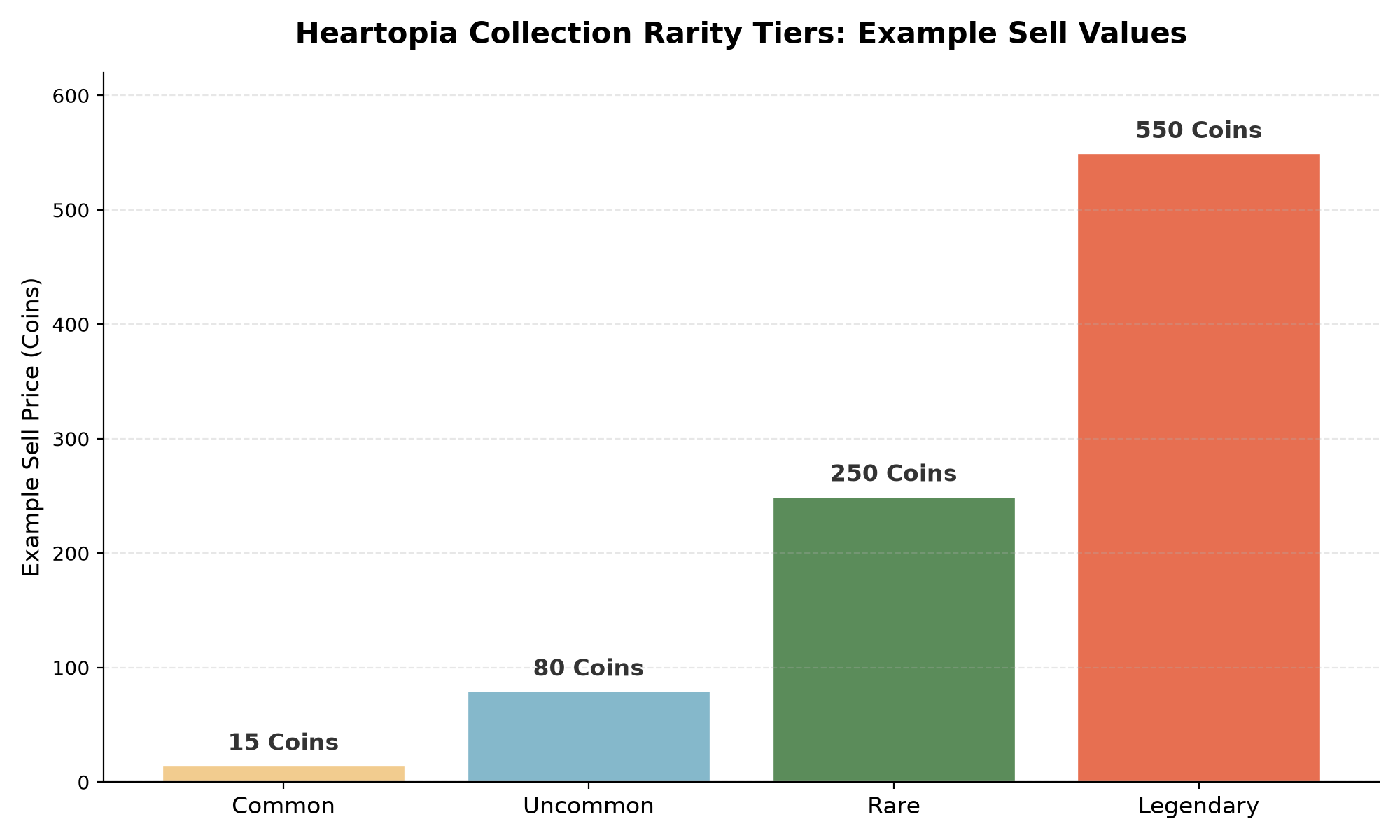
Every collectible in Heartopia falls into one of four rarity tiers: Common, Uncommon, Rare, and Legendary. Rarity determines both how hard an item is to find and how much it sells for. Legendary items are the backbone of the coin farming economy, since a single Legendary catch can equal an entire day of basic gathering.
Rarity also affects donation value. Donating a Legendary item to the museum contributes far more to the category completion progress than a Common duplicate. This creates an important decision: sell rare items for quick coins, or donate them to progress the museum first. Since museum completion rewards are permanent and one-time, donating the first copy of every rare item is almost always the better long-term choice, then selling duplicates afterward.
- Common: sell for roughly 15 Coins — abundant, easy spawns.
- Uncommon: sell for roughly 80 Coins — seasonal or location-specific.
- Rare: sell for roughly 250 Coins — require specific weather or time windows.
- Legendary: sell for 400-800 Coins — hardest spawns, highest value.
The donate-first rule has a clear exception: Museum Stars for purchases. When a museum purchase (such as the Bug Display Case or a rare recipe scroll) delivers more value than the completion bonus of the current category, players may donate strategically to that purchase first. In practice, most players benefit from donating the first copy of every Rarity 3 and 4 item, selling Commons and Uncommons freely, and holding a small reserve of duplicates for surprise donations that push a category percentage over a milestone.
Fastest Collection Completion Strategy
Completing the entire Collection database is a long-term goal measured in months, but players can speed it up dramatically with the right priorities. The single most important tip is to check the 7-day weather forecast on the watch every evening. Rainbow weather and meteor showers spawn the rarest fish, insects, and birds. Planning routes around these windows is the difference between catching a Legendary in a week and waiting a month for it to reappear.
The second priority is to unlock new regions early. New areas bring new spawn pools, and the pool of undiscovered entries is what keeps the collection interesting. Following the Development Guild progression unlocks the Onsen Mountains, Purple Light Beach, and other zones that hold exclusive species. The free-to-play strategy guide lays out the fastest path through these unlocks.
Finally, players should rotate the hobbies they engage with. Each hobby has its own collection pool, and the entry points are independent. A player who catches bugs at night and fishes in the morning effectively completes two collections in parallel. The hobby profit comparison shows which hobbies to prioritize, while the beginner tips cover the daily habits that keep every collection progressing.
A winning completion routine combines these three ideas into a single loop. Each evening, check the forecast and lock in the next day’s rare-window route. During the day, focus the current hobby only until its daily spawn windows close, then switch to the parallel hobby. Each week, push the Development Guild far enough to reach any newly available region. This structure keeps every drop of time productive instead of wandering the same map on autopilot.
Weather is the single highest-leverage variable. Because rainbow weather and meteor showers are both rare and brief, no amount of grinding on a normal day can replace being present during those windows. Players who treat the evening forecast check as a non-negotiable habit consistently complete the rarest sets weeks earlier than those who only play catch-as-catch-can.
Collection Completion Milestones
Beyond the museum donations, the Collection menu itself awards milestone rewards when an entire category reaches 100%. These rewards are separate from museum bonuses and include cosmetics, titles, and exclusive furniture. The exact reward pool shifts with updates, but the pattern is consistent: finish a set, claim a unique reward.
Because milestone rewards are one-time, there is no downside to completing a category as early as possible. The 25 things every new player should know includes the advice to start logging rare finds from day one, since entries are retroactive — a fish caught before the collection was fully understood still counts toward the set.
Milestone rewards and museum bonuses should be tracked separately, because they reward different actions. Museum progress requires donating items to display cases, while Collection milestones only require logging an entry the first time it is found. A player can complete a Collection category milestone without ever donating — and can donate duplicates without adding any new Collection entries. The efficient play is to pursue both in parallel: log every new species, and donate only the first copy of Rarity 3-4 items toward the museum set.
For players who like concrete goalposts, the natural completion order is: finish the Cooking Recipes category first (the largest set, and the most closely tied to daily gameplay), then the Fishing and Bug sets for the +15% digging and +10% mining bonuses, then the remaining categories at a relaxed pace. Choosing the first few sets deliberately turns a daunting 300-entry grind into a series of attainable milestones.
FAQ
Q: Do caught items count toward the Collection automatically?
A: Yes. The moment a fish is caught, an insect is netted, or a bird is photographed, that entry is added to the Collection database automatically. No extra action is needed to log the entry.
Q: Should players sell or donate Legendary items?
A: Donate the first copy of every Legendary item to the museum, then sell duplicates. The permanent museum bonus is worth more than a one-time coin sale, and duplicates still sell at full value.
Q: Do collection spawns reset every day?
A: Spawns are not on a fixed daily reset. They depend on season, weather, time of day, and location, and many species only appear during specific windows. Checking the 7-day weather forecast is the most reliable way to plan for rare spawns.
Q: Can the Collection database be completed without spending money?
A: Yes. Every entry in the Collection database can be obtained by free-to-play players. Premium shop items are cosmetic and separate from the collection pools. The zero-spend guide covers the full strategy.
Q: Which museum category should players complete first?
A: Most players finish the sets that grant digging speed and mining yield bonuses first, since those perks accelerate daily grinding. The Cooking and Fishing categories overlap with normal gameplay, making them the least disruptive to complete alongside a regular routine.